
Why Sapphires?
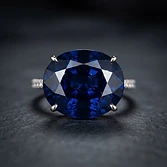
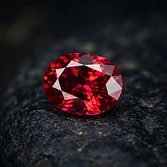
Sapphires are the most popular coloured gemstone in the world, and for good reason. With a hardness of 9 on the Mohs scale (second only to diamond), they're durable enough for everyday wear in rings and bracelets. They come in nearly every colour of the rainbow — blue, pink, yellow, peach, green, purple, and even colourless (white sapphire). And fine natural sapphires carry a timeless elegance that transcends fashion trends.
But buying a sapphire can be daunting. Unlike diamonds, which have a standardised grading system, sapphires are evaluated by a more subjective set of criteria. This guide will walk you through everything you need to know to make a confident, informed purchase.
Step 1: Understand Colour
Colour is the most important factor in a sapphire's beauty and value. When evaluating colour, consider three things:
Hue
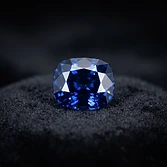
The basic colour of the stone. For blue sapphires, the most prized hue is a pure to slightly violetish blue. Stones that are too green or too purple are less valuable. The ideal is often described as "cornflower blue" (Ceylon) or "royal blue" (Kashmir/Burma) — bright, vivid, and luminous.
Saturation
The richness or intensity of the colour. Look for stones with strong, vivid saturation. Stones that look grey, brown, or washed out are less desirable. Hold the stone under different light sources — daylight, fluorescent, and incandescent — to see how the colour holds up. A fine sapphire should look good in all lighting conditions.
Tone
How light or dark the colour is. The ideal tone is medium to medium-dark — not so light that the stone looks pale, and not so dark that it looks black. If you can't see the stone's brilliance because the colour is too dark, it's too deep in tone.
Step 2: Check Clarity
Unlike diamonds, sapphires are expected to have some inclusions — they're part of the stone's natural character. What you want to avoid are:
- Large, dark inclusions visible to the naked eye
- Surface-reaching fractures that could affect durability
- Excessive silk (fine rutile needles) that makes the stone look milky or sleepy
An eye-clean sapphire (no inclusions visible without magnification) is ideal and commands a premium. Minor inclusions that are only visible under magnification are perfectly acceptable and don't significantly affect value.
Step 3: Evaluate Cut
A well-cut sapphire will have:
- Brilliance — light reflecting back through the top of the stone
- Symmetry — even proportions and balanced shape
- No windowing — you shouldn't be able to see through the bottom of the stone (a "window") when looking from the top
- Even colour distribution — no dark or light patches
Sapphires are most commonly cut in oval and cushion shapes, but round, pear, emerald-cut, and heart shapes are also available. The cut quality can make a huge difference — a poorly cut stone will look lifeless regardless of its colour.
Step 4: Understand Treatment
This is one of the most important — and most misunderstood — aspects of buying a sapphire. Treatment status dramatically affects both price and long-term value.
Unheated (Natural)
The stone's colour is entirely the product of nature. No heat treatment has been applied. These stones are rare (less than 5–10% of the market) and command significant premiums. They're also the best choice for investment, as their rarity premium continues to grow.
Heated (Conventional Heat Treatment)
The stone has been heated to high temperatures (typically 800–1800°C) to improve colour and clarity. This is a permanent, stable, and widely accepted practice — the vast majority of sapphires on the market have been heated. Heated stones are perfectly fine for jewellery and everyday enjoyment, but they don't carry the same investment premium as unheated stones.
Other Treatments (Avoid for Investment)
- Beryllium treatment — involves diffusing beryllium into the stone at high temperatures. Significantly alters colour. Must be disclosed. Reduces value substantially.
- Surface diffusion — colour is only on the surface layer. Can be removed by repolishing. Low value.
- Glass filling — fractures filled with lead glass. Primarily seen in rubies. Must be disclosed. Lowest value.
Always ask about treatment and insist on a certificate that states the treatment status.
Step 5: Consider Origin
Origin affects price, but it shouldn't be your primary concern unless you're buying at the investment level. For most buyers, colour and quality matter more than where the stone was mined. That said, the main sources of fine sapphires are:
- Sri Lanka (Ceylon) — the most consistent source of fine blue sapphires. Bright, luminous colour. Also the primary source of padparadscha sapphires.
- Madagascar — produces excellent blue sapphires, often comparable to Ceylon stones in quality.
- Kashmir — historically the finest blue sapphires, with a velvety cornflower colour. Extremely rare and expensive. Mining effectively ceased decades ago.
- Burma (Myanmar) — produces fine blue sapphires alongside its famous rubies.
- Thailand & Cambodia (Pailin) — historically important sources, now largely depleted.
Step 6: Get a Certificate
For any sapphire of significant value (generally over $1,000), insist on a certificate from a recognised laboratory. The certificate will confirm:
- The stone is a natural sapphire (not synthetic)
- Whether it has been heated or is unheated
- The geographic origin (if determinable)
- Any notable treatments or enhancements
Respected laboratories include:
- GIA — the most widely recognised gem lab globally
- GRS — highly respected for coloured stones, particularly for origin determination
- SSEF — the preferred lab of major auction houses
- Gübelin — renowned for rigorous origin analysis
Step 7: Set a Budget and Buy from a Reputable Dealer
Sapphire prices vary enormously based on the factors above. As a rough guide (for blue sapphires, per carat):
- $200–$500/ct — commercial quality, heated, smaller stones (1–2ct)
- $500–$2,000/ct — good quality, heated, medium size (2–3ct)
- $2,000–$8,000/ct — fine quality, heated or unheated, larger stones (3–5ct)
- $8,000–$30,000+/ct — investment grade, unheated, prestigious origin, certified
Buy from a dealer who:
- Provides clear, written disclosure of treatment status
- Offers certificates from recognised laboratories
- Has a clear return policy (at least 7–14 days)
- Has been in business for several years and has positive reviews
- Is willing to answer your questions patiently and honestly
Questions to Ask Before You Buy
- Is this sapphire natural or synthetic?
- Has it been heat-treated? Are there any other treatments?
- What is the origin?
- Does it come with a certificate? Which laboratory?
- Can I see the stone under different lighting?
- What is your return policy?
- Do you offer an independent appraisal?
Final Thoughts
Buying a natural sapphire should be a joyful experience. Take your time, ask questions, and don't rush. The right sapphire — one with beautiful colour, good clarity, and honest disclosure — will give you a lifetime of enjoyment and may even be something you pass down to future generations. When you find the right stone, you'll know it: it will catch your eye and hold your gaze, and that's the stone worth buying.