
A Symphony of Sunset Hues
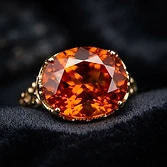
In the rarefied world of high jewelry, few gemstones command the same reverence as the Padparadscha sapphire. Deriving its name from the Sinhalese word for 'lotus blossom,' this extraordinary variety of corundum is celebrated for its delicate, hypnotic fusion of pink and orange. It is not merely a gemstone; it is a visual representation of a tropical sunset captured in crystalline form. For the discerning collector, a true Padparadscha represents the pinnacle of natural beauty, far transcending the common sapphire in both rarity and aesthetic prestige.
Gemological Identity and Composition
From a scientific perspective, the Padparadscha is a member of the corundum family, sharing the same mineralogical blueprint as its blue and ruby counterparts. With a formidable hardness of 9 on the Mohs scale, it is surpassed only by diamond, making it an ideal choice for heirloom-quality jewelry. Its chemical composition is primarily aluminum oxide (Al2O3), though the presence of trace elements such as chromium and iron is what orchestrates its signature color play.
- Crystal System: Trigonal, typically forming as tabular, hexagonal prisms.
- Refractive Index: 1.762–1.770, providing the high brilliance expected of premium sapphires.
- Color Range: A nuanced spectrum, spanning pastel pink-orange to deep salmon, typically lacking any brownish or overly dark secondary modifiers.
The distinction between a 'pink-orange sapphire' and a true Padparadscha is a subject of intense debate among gemologists. The consensus is that the gem must exhibit a subtle, harmonious balance of colors. If a stone tilts too heavily toward red, it is classified as a ruby; if it leans too far into pink, it loses its identity as a Padparadscha.
The Geographic Signature: Origins and Rarity
The original and most sought-after source for this gemstone is the Sri Lankan (formerly Ceylonese) gravels. For centuries, the island nation has yielded stones of unparalleled clarity and saturation. While other deposits have been identified in regions such as Vietnam, Madagascar, and Tanzania, many experts still hold that the finest, most 'lotus-like' specimens are found in the alluvial deposits of Sri Lanka. This geographic provenance is a critical factor in both valuation and collector desirability.
Mining for these gems is an arduous process, often involving traditional methods that preserve the integrity of the environment. Because these stones occur in such limited quantities, the discovery of a high-clarity, unheated Padparadscha is a momentous event in the global gemstone trade, frequently drawing the eyes of auction houses and private investors alike.
Investment Insights and Buying Wisdom
For the luxury buyer, navigating the Padparadscha market requires both patience and expert guidance. Because of their scarcity, the industry has unfortunately seen a surge in heat-treated and beryllium-diffused sapphires masquerading as natural, untreated gems. To ensure your investment is protected, always demand certification from reputable laboratories such as GRS, GIA, or SSEF.
When assessing a potential purchase, consider the following:
- Heat Treatment: Natural, unheated Padparadscha sapphires command a significant price premium. While heated stones are often more stable in color, the 'unheated' pedigree is the gold standard for high-end investment.
- Color Distribution: Look for stones with excellent color uniformity and high transparency. A 'velvety' appearance, common in the finest Sri Lankan specimens, is a highly prized aesthetic attribute.
- Certification: Never purchase a significant Padparadscha without a full, detailed report verifying its origin and the absence of synthetic enhancements.
Ultimately, the Padparadscha sapphire remains an asset that appreciates not only in monetary value but in the sheer joy it brings to the wearer. It is a gem for the individual who appreciates the singular, the rare, and the untamed beauty of the Earth's most precious minerals.