
The Ancient Brilliance of Zircon
In the world of high-end gemology, few stones possess a pedigree as storied as Zircon. Often misunderstood due to the historical confusion with synthetic cubic zirconia, natural zircon is a magnificent, highly refractive gemstone that has graced the jewelry of royalty for centuries. Chemically defined as zirconium silicate (ZrSiO4), this mineral boasts a tetragonal crystal system and a hardness of 6.5 to 7.5 on the Mohs scale, making it a sophisticated choice for fine jewelry when set with the proper protective care.
Geological Origins and Global Footprints
Zircon is an essential accessory mineral in igneous, metamorphic, and sedimentary rocks. Its extraordinary durability and resistance to chemical weathering allow it to survive geological shifts over billions of years, earning it the title of the oldest mineral on Earth. When considering an investment-grade gemstone, provenance is paramount. Notable sources include:
- Sri Lanka: Known for the legendary 'Matura Diamond'—colorless zircons that display exceptional fire and dispersion.
- Cambodia: Specifically the Ratanakiri region, which is world-renowned for producing the finest 'Blue Zircon,' achieved through careful heat treatment of brown stones.
- Tanzania and Madagascar: These regions have recently emerged as sources for high-clarity specimens in vibrant shades of golden-yellow, cognac, and rare violet.
- Australia: A primary source for industrial-grade zircon, though select localities occasionally yield gem-quality pieces of significant size.
The Art of Color and Clarity
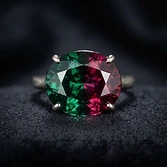
Natural zircon is admired for its high dispersion—the ability to split light into a rainbow of spectral colors—which gives it a brilliance that rivals the diamond. While commonly found in earthy browns and reds, these stones are frequently subject to heat treatment in a controlled atmosphere to produce the highly coveted oceanic blues and pristine whites. For the discerning collector, it is vital to source stones with GIA certification or reports from other reputable gemological laboratories to verify that the color is stable and the stone is indeed natural.
Investment Insights and Buying Advice
From an investment perspective, Zircon occupies a unique niche. It offers a rare combination of historical significance, intense optical properties, and relatively accessible entry points compared to sapphires or diamonds. However, the market favors 'clean' stones—those without visible inclusions—and those with exceptional, vivid saturation. When acquiring a high-value piece, focus on the cut; a precision-cut zircon will maximize its inherent 'fire' and luster. Always ensure your gemstone has been ethically sourced, as transparency in the supply chain is a hallmark of the modern luxury market.
Conclusion: A Legacy on Your Finger
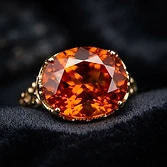
Zircon is more than just a gemstone; it is a fragment of Earth’s primordial history. Whether you are captivated by the cool, serene depth of a Cambodian blue zircon or the warm, autumnal glow of a Tanzanian yellow specimen, you are investing in a mineral that has weathered eons. As we look to the future of ethical luxury, the allure of natural zircon remains undiminished—a brilliant, timeless choice for the sophisticated connoisseur.