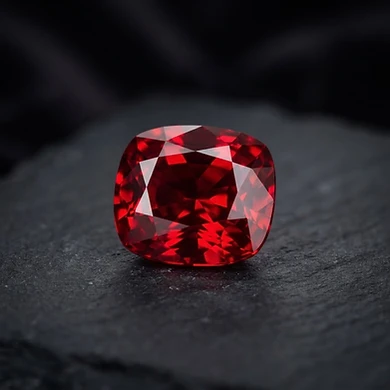
In the rarefied world of fine colored gemstones, few treasures command the quiet reverence that spinel enjoys among gemologists, discerning collectors, and bespoke jewelers. Historically overshadowed by corundum—famously masquerading as ruby in royal regalia such as the British Imperial State Crown's Black Prince's Ruby—spinel has stepped firmly into its own spotlight. Among its most compelling attributes in modern high jewelry is an exceptional virtue: unlike rubies and sapphires, which are routinely subjected to high-temperature baking and chemical manipulation, the vast majority of natural spinels enter the market entirely unenhanced.
Yet, as market demand surges and top-tier rough commands record premiums at international auctions, the landscape around spinel enhancements is subtly evolving. For the luxury investor and passionate collector, understanding both the pristine natural baseline of spinel and the emergence of modern treatments is essential to safeguarding acquisitions.
The Gemological Foundation: Inherent Brilliance and Purity
To understand why spinel resists standard treatment protocols, one must examine its crystalline architecture. Spinel is a magnesium aluminum oxide with the chemical formula MgAl2O4. It crystallizes in the isometric (cubic) crystal system, often forming pristine octahedral crystals that Burmese miners poetically term nat thwe, or "polished by the spirits."
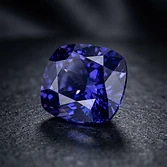
Possessing a notable hardness of 8 on the Mohs scale and an absence of cleavage, spinel is inherently durable, tough, and impervious to everyday chemical wear. Optically, it is singly refractive (isotropic), with a refractive index generally hovering around 1.717 to 1.740 depending on trace element content. Unlike doubly refractive gems that divide light into contrasting pleochroic rays, spinel delivers a singularly pure, continuous color saturation. Whether colored by chromium to yield incandescent "pigeon's blood" reds and neon "Jedi" pinks, or by cobalt and iron to produce electric blues, fine spinel emerges from the earth possessing natural clarity and brilliance that rarely requires artificial help.
The Standard Paradigm: Why Spinel Remains Typically Untreated
In classical gemology, spinel has long been celebrated as the benchmark for unadulterated nature. In corundum, heat treatment dissolves rutile silk, diffuses color-causing ions, and repairs structural defects. In spinel, however, thermal intervention historically offered little to no commercial advantage.
- Thermal Inertia: Research by major gemological laboratories has revealed that standard heat treatments do not reliably improve spinel's color. While heating dark or brownish stones can occasionally mitigate secondary orange or brown masks, it frequently produces unpredictable results, sometimes muddying clarity or inducing structural strain.
- Economic Disincentive: Because the natural material frequently displays fine transparency and vibrant saturation straight from historic alluvial gravels, the marginal shift achieved through heating rarely justifies the substantial risk of damaging a valuable crystal.
- Collector Premium: Connoisseurs prioritize natural status. Because unheated provenance is the historical baseline for spinel, any treated stone suffers a severe discount in the secondary market.
Emerging Treatments: Heat, Diffusion, and Fracture Filling
While untreated status remains the industry expectation, escalating prices for premier colors—such as Mogok reds and Luc Yen cobalt blues—have spurred experimental treatments in secondary trading hubs. Today’s collectors must remain vigilant regarding three specific enhancement categories:
1. Thermal Enhancement (Heat Treatment)
Controlled heating has occasionally been documented in commercial markets to lighten overly dark tones or subtly alter pinkish-orange rough into more commercially desirable pink or red hues. Gemological laboratories detect thermal processing in spinel by observing anomalous optical behavior, transformed multiphase inclusions, and subtle changes in photoluminescence spectroscopy and Raman spectra that signify the disordering of the cation lattice.
2. Cobalt and Titanium Surface Diffusion
The most aggressive intervention encountered in modern markets is surface diffusion. Trace amounts of transition elements such as cobalt are introduced to light or pale-colored natural spinel rough under prolonged extreme temperatures. This creates an artificially enriched, vivid electric blue surface layer. When immersion testing or cross-sectional examinations are conducted, the intense blue color is revealed to reside only within a micro-thin rim, leaving an untreated, pale core beneath. Any recutting or heavy repolishing permanently compromises the altered color layer.
3. Fracture Filling and Clarity Clarity Enhancements
Surface-reaching fractures occasionally undergo clarity enhancement using clarity-matched oils or optical resins. While far less pervasive in spinel than in emeralds or rubies, this practice artificially masks fissures. Standard gemological microscopy, long-wave ultraviolet light, and infrared spectroscopy readily unmask these artificial substances.
Provenance and Market Perspective: Navigating Acquisitions
For high-net-worth buyers and bespoke jewelry collectors, geographic origin continues to influence desirability, though unenhanced quality and color saturation remain paramount. Renowned sources include:
- Myanmar (Burma): Mogok and Namya produce the legendary chromium-saturated red and neon hot-pink spinels that command top prices at international houses like Christie's and Bonhams.
- Sri Lanka (Ceylon): Celebrated for romantic pastel tones, rich violets, purples, and fine cobalt-influenced blues.
- Vietnam (Luc Yen): Globally coveted for striking, naturally saturated neon cobalt blues and pastel pinks.
- Tanzania (Mahenge): Famed for vibrant fuchsia, neon pink, and fiery red-orange gems.
- Tajikistan (Pamir Mountains): Historic source of large, historic pink and red spinels with regal pedigree.
From an investment perspective, untreated fine-color spinel represents exceptional value relative to unheated ruby or sapphire of equivalent scale and saturation. Because synthetic spinels—commonly produced via flame fusion since the early 20th century—and novel diffusion processes exist in broader market tiers, provenance documentation is vital. Always insist on independent certification from premier gemological laboratories (such as GIA, SSEF, or Gübelin) confirming natural origin and the complete absence of thermal or chemical enhancement.
Conclusion
Spinel endures as one of nature's purest marvels. In an era where gem enhancements have become customary across the jewelry industry, spinel’s stubborn refusal to be improved by common artificial means is precisely what makes it extraordinary. By pairing aesthetic discernment with verified gemological certification, collectors can acquire magnificent, heirloom-worthy spinels whose beauty remains exactly as the earth intended: radiant, untouched, and timeless.