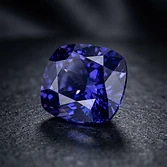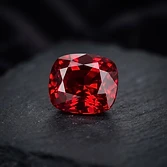
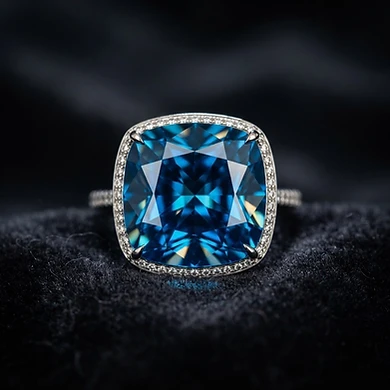
Among Earth's oldest mineral treasures, zircon (zirconium silicate, ZrSiO₄) stands in a class of its own. Crystallizing in the tetragonal system and boasting an adamantine luster, high refractive index (1.810–2.024), and exceptional dispersion (0.038), zircon produces fire and brilliance rivaling that of diamond. Despite its geologic antiquity—with some crystals enduring more than four billion years of planetary history—the contemporary presentation of zircon is intimately linked to the science of gemstone treatments and enhancements.
For discerning connoisseurs and ethical investors, navigating zircon requires a thorough understanding of human intervention versus natural crystallization. While untreated zircons carry immense historical prestige, thermal manipulation has become an established, widely accepted tradition designed to unlock the gem’s dormant optical fire.
The Thermal Transformation: Revealing Electric Hues
The vast majority of gem-quality rough zircon unearthed from alluvial gravels emerges in muted shades: reddish-brown, murky yellow, or deep smoky cognac. The signature electric neon blues, pristine colorless gems, and sunny yellow stones adored in luxury jewelry are almost exclusively the result of controlled heat treatment.
This thermal alchemy typically involves exposing rough or fashioned stones to temperatures ranging from 900°C to upwards of 1,500°C–1,800°C under precise atmospheric conditions:
- Reducing Atmospheres: Heating brown rough—predominantly sourced from Southeast Asian deposits—in an oxygen-depleted environment alters the valence state of trace iron impurities, converting reddish-brown material into intense, vivid blue zircon.
- Oxidizing Atmospheres: Heating in the presence of oxygen often yields bright yellow, golden, or perfectly colorless gems. Colorless zircons, historic substitutes for diamonds, rely on this oxidative process to eliminate tint and showcase peak dispersion.
- High-Temperature Lattice Annealing: Metamict zircons—specimens whose internal lattices have broken down over geological eras due to minute traces of radioactive uranium and thorium—can undergo high-temperature annealing. This restores their structural crystallinity, density, and refractive brilliance.
Experimental Enhancements: Irradiation, Coatings, and Detection
While thermal enhancement remains the global trade standard, other treatments occasionally enter the periphery of the market:
- Irradiation: Laboratory irradiation utilizing electron beams or gamma rays can yield or deepen saturated green and fancy orange tones. However, irradiated colors are frequently unstable when exposed to prolonged sunlight or heat, requiring scrutiny by reputable gemological laboratories.
- Surface Coatings: Infrequently applied to simulate exotic saturations, optical film coatings compromise the natural integrity of the stone. Fortunately, advanced gemological labs readily detect surface films through specular reflectance spectroscopy and microscopic edge inspection.
Specialized gemologists employ spectroscopic analysis, luminescence examination, and high-magnification immersion microscopy to identify signs of heat treatment. Thermal processing can alter liquid-gas inclusions, produce discoidal tension halos around minute mineral crystals, or cause subtle shifts in the stone's diagnostic absorption spectra.
The Collector’s Dilemma: Investment Value and Full Disclosure
In high-end gem collecting, transparency determines value. Untreated zircons exhibiting vibrant natural tones—such as unheated fine greens, deep cinnamon reds, and radiant champagne yellows—command an exceptional premium among purists. Because naturally occurring vivid blue zircon is essentially nonexistent in nature, fine heated blue zircons from classic deposits (most notably Ratanakiri, Cambodia) have carved out their own stable luxury market tier.
When acquiring fine zircon, keep these strategic principles in mind:
- Provenance and Quality: Premium rough originates from historic sources such as Cambodia, Sri Lanka (Ceylon), Myanmar, Madagascar, and Australia. Cambodia remains the premier benchmark for blue zircons that maintain stable, vivid saturation.
- Independent Certification: Always demand documentation from recognized authorities like the GIA. Certificates should explicitly state whether thermal enhancement is present or absent.
- Durability Considerations: Measuring 6.5 to 7.5 on the Mohs hardness scale, zircon possesses moderate toughness and brittle facet junctions. Faceted stones should be set in protective bezel or halo mountings to prevent chipping along the girdle.
Conclusion: Embracing Transparency in Modern Fine Jewelry
Thermal enhancement does not diminish the natural origin of zircon; rather, it reflects a centuries-old metallurgical marriage between human craftsmanship and mineralogy. By coaxing out mesmerizing dispersion and vivid color, heat treatment allows zircon to display its full aesthetic majesty. However, the boundary between everyday commercial gems and investment-grade heirlooms rests entirely on full disclosure, scientific certification, and ethical sourcing.