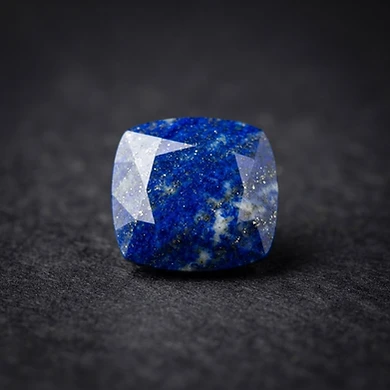
The Timeless Allure of Lapis Lazuli
Lapis Lazuli has captivated humanity for millennia, prized for its intense, celestial blue hue. Unlike many gemstones that are single minerals, Lapis Lazuli is a metamorphic rock—a complex aggregate primarily composed of the mineral lazurite, often accompanied by calcite, pyrite, and diopside. With a Mohs hardness of 5 to 6, it is a relatively soft and porous material, which makes it both a versatile medium for intricate carvings and a gemstone that requires careful handling.
As a premium collector or investor, understanding the nature of this stone is paramount. While the finest specimens—often sourced from the historic mines of Afghanistan—exhibit a uniform, deep blue color with minimal calcite or pyrite, the market is also home to stones that have undergone various enhancements to improve their aesthetic appeal.
Common Treatments and Enhancements
Because Lapis Lazuli is naturally porous, it is frequently subjected to treatments designed to stabilize the stone or deepen its color. Transparency regarding these processes is the cornerstone of ethical trade.
- Dyeing: This is perhaps the most common enhancement. Dye is used to mask unsightly white calcite patches or to intensify the blue color, creating a more uniform appearance. While this improves visual appeal, dyed stones are significantly less valuable than their untreated counterparts.
- Waxing and Oiling: These surface treatments are applied to improve the stone's luster and provide a protective barrier. While they enhance the immediate beauty of the gem, these coatings can wear off over time, requiring periodic maintenance.
- Resin Impregnation: To improve structural integrity and reduce the risk of surface abrasions, Lapis Lazuli may be impregnated with polymers or resins. This process fills microscopic pores, making the stone more durable for daily wear.
Market Insights and Investment Perspective
The market for Lapis Lazuli is currently experiencing a renaissance, driven by its popularity in high-end jewelry and luxury interior design. As demand grows, so does the importance of provenance. For the discerning buyer, the value of a piece is determined by its color intensity, the absence of distracting matrix, and, crucially, its treatment status.
When investing in Lapis Lazuli, always prioritize pieces accompanied by professional gemological certification. Reputable laboratories can detect the presence of dyes and resins, providing you with the assurance that your acquisition is authentic. In an era where blockchain technology is increasingly used to track the journey of a gemstone from mine to market, provenance documentation has become a vital tool for verifying ethical sourcing and maintaining long-term value.
Care and Preservation
Given its moderate hardness and porous nature, Lapis Lazuli demands a gentle touch. It should never be cleaned using ultrasonic or steam cleaners, as these can damage the surface or force out the resins used in stabilization. Instead, clean your pieces with a soft cloth and warm, soapy water, ensuring they are thoroughly dried afterward. If you are planning any jewelry repairs, it is essential to have the stone removed from its setting, as the heat from a jeweler's torch can easily compromise the integrity of treated stones.
Conclusion
Lapis Lazuli remains a gem of profound historical and aesthetic significance. Whether you are drawn to its metaphysical associations or its role as a staple of luxury ornamentation, a clear understanding of its gemological properties and potential treatments will serve you well. By demanding transparency and seeking professional guidance, you ensure that your collection remains as enduring as the stone itself.