The Enigmatic Beauty of Tanzanite
Tanzanite, a breathtaking variety of the mineral zoisite, is one of the most coveted gemstones in the modern market. Discovered in 1967 in the Merelani district of Tanzania, near the foothills of Mount Kilimanjaro, this gemstone is geologically unique, found only within a narrow six-kilometer strip of land. Its allure lies in its extraordinary color—a mesmerizing spectrum of deep blues and vibrant violets that captivate the eye. However, the journey from the earth to the jeweler’s display is a fascinating tale of geological rarity and human intervention.
Chemically, tanzanite is a calcium aluminum silicate. It crystallizes in the orthorhombic system and typically exhibits a vitreous luster. With a hardness of 6.5 on the Mohs scale, it is a stone that requires careful handling, making it best suited for earrings or pendants rather than high-impact daily wear like rings. Despite its relative softness, its rarity and the sheer intensity of its pleochroism—the ability to display different colors from different angles—have cemented its status as a luxury staple.
The Science of Color: Why Heat Treatment is Essential
In its natural, unheated state, tanzanite is rarely the vibrant blue we recognize. When pulled from the ground, most crystals appear as a dull, brownish-yellow or "bug juice" color. This is due to the stone's natural trichroism, where it displays three distinct colors along its three axes: blue, violet, and a dominant reddish-brown. The brown axis often masks the desirable blue and violet hues, rendering the stone less appealing for fine jewelry.
To unlock the gemstone's true potential, the industry relies on a standard and widely accepted practice: heat treatment. By placing the rough stones in a gemological oven and heating them to temperatures typically between 400°C and 700°C, the brown/burgundy axis is permanently removed. This process effectively transforms the stone from a trichroic mineral into a dichroic one, leaving behind only the brilliant blue and violet axes. This enhancement is not merely a cosmetic choice; it is a necessary step to reveal the color that has made tanzanite a global sensation.
Gemological Integrity and Market Standards
For the discerning collector, understanding the role of heat treatment is vital. Because nearly all commercially available tanzanite has undergone this process, it is considered a standard industry practice rather than a deceptive enhancement. Unlike treatments that involve fillers or dyes, heat treatment is a permanent, stable alteration of the crystal structure that does not compromise the integrity of the stone. When purchasing, it is essential to work with reputable dealers who provide transparency regarding the origin and treatment history of the gem.
From an investment perspective, tanzanite remains a compelling asset. With mining limited to a small area and commercial production increasingly concentrated in specific zones like "Block C," the supply is finite. As the availability of high-quality, untreated or expertly heated stones dwindles, the value of premium-grade tanzanite continues to be a subject of interest for those looking to diversify their collections with rare, ethically-sourced treasures.
Buying Advice for the Luxury Collector
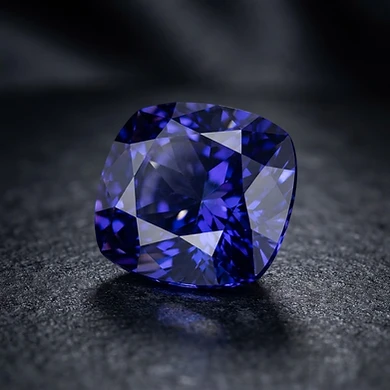
When selecting a tanzanite, color is the primary driver of value. The most prized stones exhibit a deep, saturated blue or a vivid violet-blue. Because of the stone's pleochroism, a well-cut tanzanite will show a dynamic interplay of these colors as it moves under light. When evaluating a stone, consider the following:
- Color Saturation: Look for intense, uniform color rather than pale or washed-out tones.
- Clarity: As a transparent gemstone, tanzanite should be eye-clean. Inclusions that detract from the brilliance should be avoided.
- Cut Quality: A precision cut is essential to maximize the stone's natural fire and color display.
- Provenance: Given its single-source nature, ensure your purchase comes with documentation verifying its Tanzanian origin.
Tanzanite is more than just a gemstone; it is a fleeting masterpiece of nature. By understanding the delicate balance between its natural state and the expert heat treatment that reveals its beauty, collectors can better appreciate the rarity and craftsmanship required to bring this "gem of the 20th century" to the world stage.