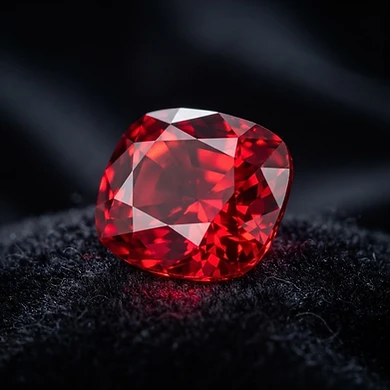
The Eternal Allure of the Ruby
Known in Sanskrit as ratnaraj, or the “king of gems,” the ruby has captivated humanity for millennia. As the most precious variety of the mineral species corundum, the ruby is prized not only for its intense, passionate hue but also for its remarkable durability. For the discerning collector, understanding the ruby is a journey into the heart of geological perfection and market rarity.
At its core, a ruby is defined by its chemical composition: aluminum oxide (Al₂O₃). While pure corundum is colorless, it is the presence of the trace element chromium that grants the ruby its iconic, vibrant red. The intensity of this color is the primary driver of its value, with the finest specimens exhibiting a vivid, saturated red that commands record-breaking prices at global auctions.
Gemological Foundations
To appreciate a ruby, one must first understand its physical properties. Rubies are exceptionally hard, registering a 9 on the Mohs scale, second only to the diamond. This makes them an ideal choice for heirloom-quality jewelry, as they are highly resistant to scratching and daily wear.
- Crystal System: Trigonal.
- Hardness: 9 on the Mohs scale.
- Chemical Composition: Aluminum oxide with chromium trace elements.
- Refractive Index: 1.762–1.770.
Because rubies form in complex geological environments, they almost always contain inclusions. In the trade, these are often referred to as “silk.” While inclusion-free rubies are exceedingly rare, the presence of these natural markers can actually help gemologists distinguish between natural stones and synthetic alternatives.
Navigating the Market: Origin and Quality
A common misconception among novice buyers is that a specific country of origin guarantees superior quality. While the legendary mines of Myanmar (formerly Burma), particularly the Mogok Valley, have historically produced the world’s most coveted rubies, fine-quality stones are also sourced from Mozambique, Madagascar, India, and beyond. It is essential to judge a ruby on its individual merits—color, clarity, and cut—rather than relying solely on its geographic provenance.
When evaluating a ruby, consider the following:
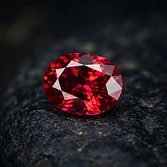
- Color: The most desirable rubies possess a pure, vibrant red to slightly purplish-red hue. Avoid stones that lean too heavily into orange or dark, muddy tones.
- Clarity: Look for stones where inclusions do not significantly impede the passage of light or compromise the structural integrity of the gem.
- Treatment: Transparency is paramount. Always inquire about treatments. While heat treatment is a standard industry practice to improve color and clarity, more invasive methods like lead-glass filling or surface diffusion significantly diminish a stone's investment value.
Investment Perspective and Buying Advice
As an investment-grade asset, the ruby market has shown consistent growth, often outperforming other colored gemstones. High-quality, untreated rubies are finite resources, and as demand from global luxury markets continues to rise, their scarcity ensures they remain a cornerstone of any serious portfolio.
For those looking to acquire a significant piece, we recommend working exclusively with reputable dealers who provide independent certification from recognized laboratories like the GIA. A professional jeweler will allow you to view multiple stones side-by-side, enabling you to appreciate the subtle nuances in saturation and brilliance that define a truly exceptional gem.
Conclusion
The ruby is more than a gemstone; it is a testament to the earth’s capacity to create enduring beauty. Whether you are drawn to the historical prestige of a Burmese stone or the modern brilliance of a Mozambique gem, the key to a successful acquisition lies in education and patience. By prioritizing natural quality and verified provenance, you ensure that your ruby remains a cherished treasure for generations to come.