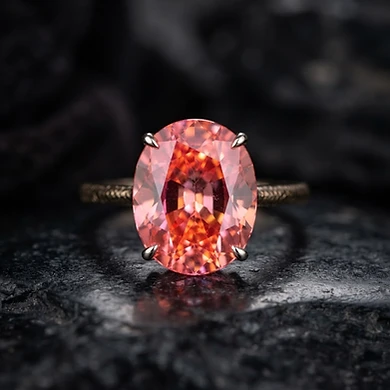
The Lotus of the Gem World
In the rarefied atmosphere of high-end jewelry, few names command as much reverence as the Padparadscha sapphire. Derived from the Sinhalese word for 'lotus blossom,' this extraordinary gemstone is defined by its ethereal, sunset-inspired blend of pink and orange hues. Unlike the more common blue sapphire, the Padparadscha is a geological anomaly, representing one of the most elusive and sought-after treasures in the mineral kingdom.
For the discerning collector, the Padparadscha is not merely a stone; it is a statement of rarity. While blue sapphires are celebrated for their regal intensity, the Padparadscha offers a delicate, nuanced beauty that defies simple categorization. Its value is driven by this scarcity, making it a cornerstone for any serious investment-grade gemstone portfolio.
Gemological Foundations
To understand the value of a Padparadscha, one must first appreciate its chemical and physical identity. Like all sapphires, the Padparadscha is a variety of the mineral corundum (Al2O3), crystallizing in the trigonal system. It boasts a hardness of 9 on the Mohs scale, second only to diamond, which ensures its durability for fine jewelry applications.
The 'alchemy' of its color is a precise dance of trace elements. While blue sapphires rely on titanium and iron, the Padparadscha requires a delicate, balanced concentration of chromium and iron within the crystal lattice. If the chromium levels are too high, the stone shifts toward a pink sapphire; if iron or specific color centers dominate, it leans toward orange. Achieving the perfect 'salmon' or 'sunset' equilibrium is a rare occurrence in nature, primarily sourced from the historic gem-bearing regions of Sri Lanka.
Navigating Market Value and Investment
The market for Padparadscha sapphires is highly specialized. Because the definition of the color can be subjective, professional certification is non-negotiable. Reputable laboratories—such as GIA, SSEF, and Gübelin—are the final arbiters of whether a stone qualifies for the 'Padparadscha' designation. Investors should be wary of stones that lack these credentials, as the market has historically seen attempts to artificially replicate this color through heat treatment or diffusion.
- Pricing Dynamics: Prices typically range from $500 to over $8,000 per carat, depending heavily on color saturation, clarity, and origin.
- The Premium on Natural: Non-heated, natural Padparadschas command the highest premiums. A significant increase in value is often associated with stones that possess a clean, vivid color profile without the need for thermal enhancement.
- Clarity Considerations: Because of the stone's light, pastel tones, inclusions are more visible than in darker gems. High clarity is essential to maintain the brilliance and 'glow' that defines a top-tier specimen.
When purchasing, prioritize color and cut over sheer carat weight. A smaller, perfectly saturated stone will almost always outperform a larger, duller, or heavily included specimen in terms of long-term appreciation.
Buying Advice for the Discerning Collector
For those looking to acquire a Padparadscha, the journey is as important as the destination. Given the influx of treated stones in the late 1990s, always insist on a comprehensive lab report that explicitly states the stone's treatment status. Furthermore, consider the setting; a halo setting can enhance the stone's delicate color, but a simple, high-quality mounting often allows the natural beauty of the gem to speak for itself.
Ultimately, the Padparadscha sapphire is a testament to nature's complexity. It is a gem for the collector who values the story behind the stone—the unique geological conditions required to produce that perfect, fleeting sunset hue. By focusing on certified, natural, and well-cut specimens, you are not just buying a gemstone; you are securing a piece of geological history.