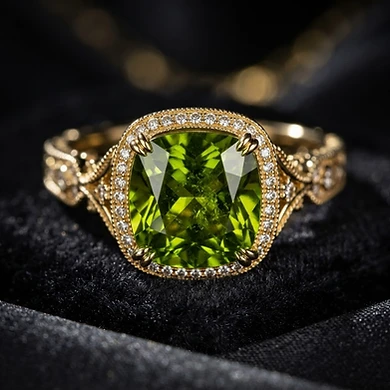
The Celestial Gem of Summer
Peridot, often referred to as the 'evening emerald' for its ability to retain its vivid color under artificial light, is a gemstone of remarkable character. As the birthstone for August and the traditional gift for the 15th wedding anniversary, it occupies a unique space in the luxury market. Unlike many other colored stones that require heat or chemical enhancement, peridot is celebrated for its natural, untreated beauty, making it a favorite for those who prioritize authenticity in their acquisitions.
Gemologically, peridot is the gem-quality variety of the mineral olivine. Its chemical composition is (Mg, Fe)₂SiO₄, where the presence of iron is responsible for its signature lime-to-olive green hue. With a Mohs hardness of 6.5 to 7, it is durable enough for daily wear in rings and pendants, provided it is treated with the care befitting a fine gemstone.
Quality Factors: The Four Pillars of Value
When evaluating peridot for your collection, the following criteria are paramount:
- Color: The most desirable peridot exhibits a pure, intense grass-green or lime-green hue. Avoid stones with excessive brown or yellow undertones, which can diminish the gem's brilliance and market value.
- Clarity: Fine peridot is typically eye-clean. While some inclusions are natural, they should not detract from the stone's overall transparency. Under magnification, you may observe tiny black spots or unique 'lily pad' inclusions, which are characteristic of the species.
- Cut: Because peridot possesses high double refraction, a precise cut is essential to maximize light return and brilliance. Look for symmetrical facets and excellent polish, which allow the stone to sparkle with its characteristic 'oily' luster.
- Carat Weight: Peridot is available in a wide range of sizes. While smaller stones are accessible, high-quality specimens exceeding 10 carats are considered significant and command a premium in the collector's market.
Origins and Provenance
Peridot is found globally, with notable deposits in Pakistan, Myanmar (Burma), China, Vietnam, and the United States (Arizona). Stones from Myanmar and Pakistan are frequently cited by connoisseurs for their superior color saturation and clarity. Interestingly, peridot is one of the few gemstones with an extraterrestrial origin; it has been discovered in pallasite meteorites, remnants of the early solar system, adding a layer of cosmic intrigue to its provenance.
Investment and Buying Advice
For the discerning buyer, the most critical step is ensuring the stone is natural and untreated. Peridot is rarely enhanced, but as with any luxury purchase, documentation is key. When investing in a significant piece, always request a grading report from a reputable laboratory such as the GIA or IGI. This provides an authoritative assessment of the stone’s origin, treatment status, and quality characteristics.
When purchasing, prioritize stones that exhibit a vibrant, saturated green. While peridot is not considered 'rare' in the same vein as a fine ruby or sapphire, a high-quality, large, and well-cut peridot is a sophisticated addition to any jewelry suite. Always verify the provenance if a seller claims a specific, historically significant origin, as this can influence the long-term value of the piece.
Conclusion
Peridot is a gemstone that bridges the gap between ancient history and modern luxury. Its unique chemical composition, combined with its natural, untreated state, makes it a compelling choice for the ethical collector. By focusing on color intensity, clarity, and professional certification, you can secure a piece that is not only a stunning accessory but a lasting treasure. Whether you are drawn to its celestial origins or its vibrant, life-affirming color, peridot remains a timeless testament to the beauty of the natural world.