
Beyond the Four Cs
Most people are familiar with the Four Cs — colour, clarity, carat, and cut — as the framework for evaluating diamonds. But for coloured gemstones, the valuation landscape is far more nuanced. A fine sapphire, ruby, or emerald is judged by a richer set of criteria that can mean the difference between a $500 stone and a $500,000 one.
1. Colour: The Single Most Important Factor
For coloured gemstones, colour accounts for approximately 50–70% of the stone's value. But it's not just about being "blue" or "red" — it's about three dimensions of colour:
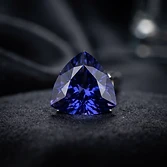
- Hue — the basic colour (blue, red, green) and any secondary tones (violet, orange, yellow). The most valuable sapphires have a pure blue hue with a slight violet undertone (around 85% blue, 15% violet).
- Saturation — the intensity or purity of the colour. Stones with high saturation (vivid, rich colour) command premium prices. Grey or brown secondary tones reduce value significantly.
- Tone — how light or dark the colour is. Medium to medium-dark tones are generally most desirable — too light and the stone looks washed out; too dark and it appears black.
The legendary "pigeon's blood" red of Burmese rubies and the "royal blue" of Kashmir sapphires are examples of colours so distinctive and desirable that they command multiples of what similar-sized stones in slightly different shades would fetch.
2. Clarity: Tolerance Varies by Species
Unlike diamonds, where clarity is paramount, coloured gemstones are expected to contain some inclusions — they're part of the stone's character and often confirm its natural origin. What matters is the type of inclusion and its visibility:
- Eye-clean stones (no visible inclusions to the naked eye) command the highest prices across all species.
- Silk — fine rutile needle inclusions — can actually increase value in sapphires and rubies, as it creates the asterism effect in star stones and indicates the stone is unheated.
- Large, dark, or eye-visible fractures and crystals significantly reduce value.
Different species have different clarity expectations: emeralds are almost always included (the French call them jardin, or garden), while aquamarine and topaz are expected to be very clean.
3. Carat Weight: Exponential, Not Linear
Price per carat does not increase linearly with size — it increases exponentially. A 5-carat sapphire is not simply five times the price of a 1-carat sapphire of the same quality; it may be 10 to 20 times more expensive. This is because large, high-quality rough is exponentially rarer than small rough.
Key size thresholds where prices jump significantly:
- 1 carat — entry level for fine jewellery
- 3 carats — serious collector territory
- 5 carats — investment grade
- 10 carats and above — museum and auction calibre
4. Origin: Provenance Commands a Premium
For top-tier stones, origin can be the single largest value driver after colour. A 3-carat unheated blue sapphire from Kashmir may sell for 5–10 times the price of a comparable stone from Madagascar. Recognised origins and their typical premiums:
- Kashmir sapphires — the rarest and most expensive, with a velvety cornflower blue. Mining effectively ceased decades ago.
- Burma (Mogok) rubies — the historic source of pigeon's blood rubies, now extremely scarce.
- Colombian emeralds — particularly Muzo and Chivor, prized for their pure green colour.
- Ceylon (Sri Lanka) sapphires — the most consistent source of fine blue sapphires for over two millennia.
Origin is determined by a combination of inclusion analysis, trace element fingerprinting, and sometimes isotopic testing, performed by major laboratories like GIA, GRS, SSEF, and Gübelin.
5. Treatment: Unheated Stones Are Rare and Valuable
The vast majority of sapphires and rubies on the market have been heat-treated to improve colour and clarity. This is an accepted, disclosed practice that has been used for decades. However, unheated (natural) stones — those whose colour is entirely the product of nature — command significant premiums, often 2–5 times the price of a comparable heated stone.
Other treatments have varying impacts on value:
- Unheated — highest value, increasingly rare
- Heated (conventional) — standard, accepted, moderate value
- Beryllium treatment — significant value reduction
- Glass filling (rubies) — substantial value reduction, must be disclosed
- Diffusion treatment — surface-level colour, lowest value
6. Certification: The Trust Factor
A laboratory certificate from a recognised authority is essential for any stone of significant value. The certificate confirms the stone's identity, origin, treatment status, and any notable characteristics. The most respected laboratories include:
- GIA (Gemological Institute of America) — the global standard
- GRS (GemResearch Swisslab) — particularly respected for coloured stones
- SSEF (Swiss Gemmological Institute) — the choice of major auction houses
- Gübelin Gem Lab — renowned for origin determination
A stone with a GRS or SSEF certificate stating "unheated, Ceylon origin" will command a meaningfully higher price than an identical stone without certification.
Putting It All Together
When evaluating a gemstone's value, consider all factors together: a large, clean, vivid stone from a prestigious origin with no treatment and a top-lab certificate represents the pinnacle of value. Compromise on any single factor, and the price drops — sometimes dramatically. Understanding these factors empowers buyers to make informed decisions and recognise true value when they see it.